
The Shadow AI Threat: Is Your Team Leaking Corporate Data?
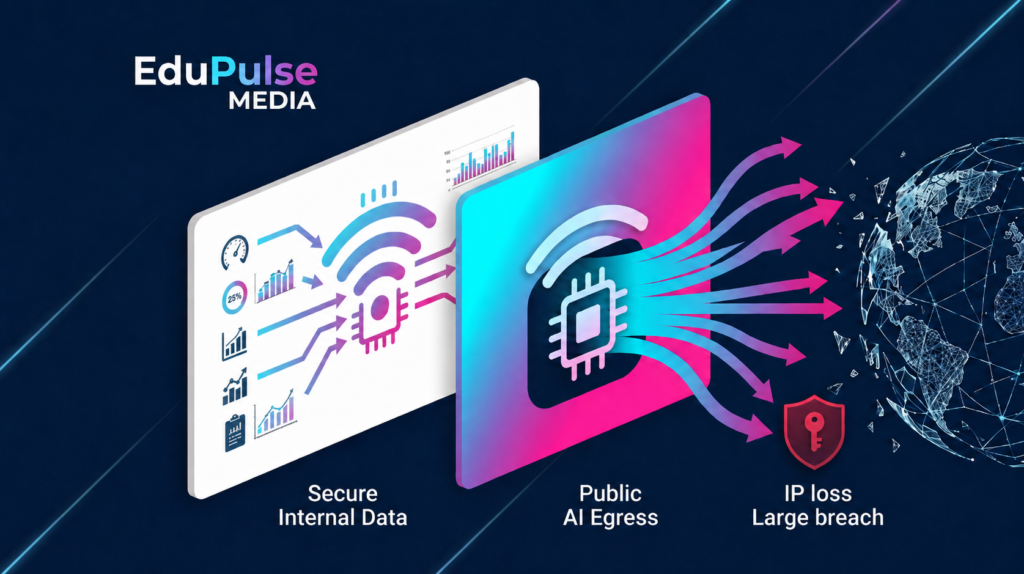
Right now, somewhere inside your organisation, an employee is copying sensitive client data into a free AI chatbot.
They are not trying to cause harm. They are trying to work faster. But the result of your business strategies, client records, financial models, and internal communications is landing on the servers of a platform that you have zero contractual protection with, zero audit visibility into, and zero ability to retrieve from.
This is Shadow AI. And for Australian enterprises, it represents one of the most significant and least-discussed operational risks of the current decade.
IS YOUR BUSINESS AT RISK OF A
DATA BREACH?
EduPulse Media
What Is Shadow AI?
Shadow AI refers to any unsanctioned use of artificial intelligence tools within an organisation. It mirrors the older concept of Shadow IT — where employees adopted consumer software without IT approval — but the risks are fundamentally different.
When an employee uses a personal Dropbox account, you may lose a file. When an employee feeds your client database into a public large language model, you may lose your clients, your IP, your regulatory standing, and your competitive edge — all at once.
The challenge is scale and invisibility. Shadow AI adoption is happening across every department: marketing teams generating copy, finance analysts summarising reports, HR professionals drafting sensitive correspondence. Each interaction is a potential data exposure event.
Shadow AI adoption is happening across every department: marketing teams generating copy, finance analysts summarising reports, HR professionals drafting sensitive correspondence. Each interaction is a potential data exposure event.
The Australian Regulatory Landscape
Australia’s Privacy Act 1988 imposes strict obligations on how organisations collect, use, and disclose personal information. The December 2026 amendments will introduce mandatory automated decision-making transparency requirements, and the Office of the Australian Information Commissioner (OAIC) has been explicit: organisations cannot outsource their privacy obligations to third-party AI platforms.
If your employee feeds client data into an external AI tool without a Data Processing Agreement in place, you may already be in breach. The exposure is not theoretical, it is operational and immediate.
How Shadow AI Infiltrates Your Systems
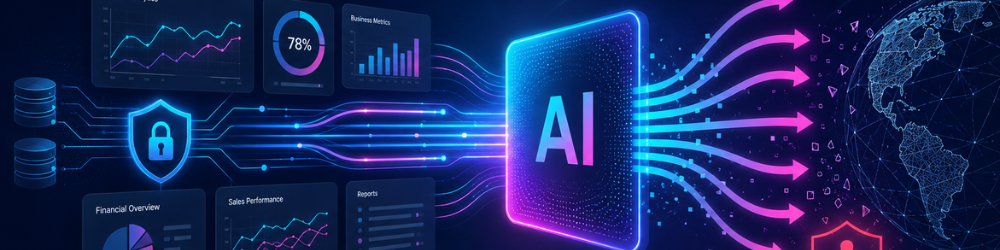
- Speed pressure: Employees under delivery pressure will use any tool that makes them faster. If your approved toolset is slower than consumer AI, adoption is inevitable.
- Lack of awareness: Most staff do not understand the difference between a sandboxed internal model and a public web AI. They see a chat interface and assume it behaves like a private conversation.
- Management blind spots: Leaders who are not actively monitoring AI usage have no visibility into what is being processed externally. By the time a breach surfaces, months of exposure have already accumulated.
- Free-tier temptation: Enterprise-grade AI requires procurement, approval, and budget. Free tools require nothing but a browser.
A single Shadow AI incident can trigger:
- Regulatory penalties under the Privacy Act, with fines reaching millions for serious or repeated breaches
- Client contract breaches, particularly for professional services firms with data handling clauses
- Intellectual property loss, where proprietary methodologies, pricing models, or unreleased product data enter training datasets
- Reputational damage that takes years to recover from once disclosed to the market
Building Your Shadow AI Defence
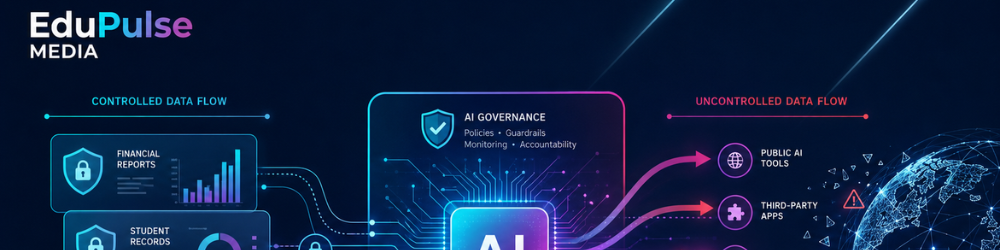
An effective response operates at three levels:
- Visibility: Deploy monitoring tools that flag AI-related network traffic. You cannot govern what you cannot see. Enterprise platforms like Microsoft Copilot, integrated within your existing Microsoft 365 tenancy, provide managed AI access without external data egress.
- Policy: Implement a formal AI Acceptable Use Policy that defines which tools are approved, what data classifications can be processed, and what the consequences of non-compliance are. This policy must be signed by all staff, not buried in an IT handbook.
- Literacy: Run structured AI training that helps employees understand not just the tools, but the underlying data architecture. When staff understand *why* public AI is dangerous, compliance becomes intrinsic rather than enforced.
The Strategic Opportunity
Organisations that move first on Shadow AI governance do not just reduce risk — they build a structural competitive advantage. Clean data governance accelerates enterprise sales cycles, satisfies procurement due diligence, and enables safe AI deployment at scale.
The question is not whether your team is using AI. They are. The question is whether you know about it, and whether you are in control.
More insights
Insights · 5 min read
AI Governance Policies for Business
Unregulated “Shadow AI” adoption quietly exposes Australian enterprises to massive data leaks, intellectual property liabilities, and severe regulatory non-compliance. Implementing…
Read more →
EduPulse Media
EduPulse Media is a full-stack consultancy and education ecosystem supporting vocational consulting, instructional design, AI strategy and digital growth.
© 2026 EduPulse Media. All rights reserved.